






2026-06微软漏洞通告
-
作者:火绒安全
-
发布时间:2026-06-10
-
阅读量:4657
微软官方发布了2026年6月的安全更新。本月更新公布了204个漏洞,包含64个特权提升漏洞、55个远程执行代码漏洞、30个信息泄露漏洞、27个身份假冒漏洞、安全功能绕过漏洞18个、7个拒绝服务漏洞、篡改漏洞3个,其中38个漏洞级别为“Critical”(高危),166个为“Important”(严重)。建议用户及时使用火绒安全软件(个人/企业)【漏洞修复】功能更新补丁。
涉及组件
.NET
Active Directory Domain Services
ASP.NET Core
Azure HorizonDB
Azure Stack Edge
Copilot Chat (Microsoft Edge)
Function Discovery Service (fdwsd.dll)
GitHub Copilot and Visual Studio Code
HTTP/2
Linux MANA Driver
M365 Copilot
Microsoft Azure Attestation service and Device Health Attestation Service
Microsoft Azure Kubernetes Service
Microsoft Bing
Microsoft Copilot
Microsoft Defender for Endpoint
Microsoft Dynamics 365 (on-premises)
Microsoft Exchange Online
Microsoft Exchange Server
Microsoft Graph
Microsoft Graphics Component
Microsoft Kinect
Microsoft Live Share Canvas SDK
Microsoft Office
Microsoft Office Click-To-Run
Microsoft Office Excel
Microsoft Office Project
Microsoft Office SharePoint
Microsoft Office Word
Microsoft PC Manager
Microsoft PowerToys
Microsoft Teams for Android
Microsoft UxTheme Library (uxtheme.dll)
Microsoft Windows DNS
Nuance PowerScribe
Office for Android
Remote Desktop Client
Role: Windows Hyper-V
UI Automation Manager (uiamanager.dll)
Universal Plug and Play (upnp.dll)
Visual Studio Code
Windows Administrator Protection
Windows Ancillary Function Driver for WinSock
Windows Application Identity (AppID) Subsystem
Windows BitLocker
Windows Bluetooth Port Driver
Windows Bluetooth Service
Windows Boot Manager
Windows Collaborative Translation Framework
Windows Common Log File System Driver
Windows Cryptographic Services
Windows Deployment Services
Windows DHCP Client
Windows DHCP Server
Windows DWM Core Library
Windows Hotpatch Monitoring Service
Windows HTTP.sys
Windows Hyper-V
Windows Internet (wininet.dll)
Windows Kerberos
Windows Kernel
Windows Kernel-Mode Drivers
Windows Mark of the Web (MOTW)
Windows Media
Windows Narrator Braille
Windows Network Controller (NC) Host Agent
Windows NT OS Kernel
Windows NTFS
Windows NTLM
Windows Performance Monitor
Windows Program Compatibility Assistant Service
Windows Projected File System Filter Driver
Windows Push Notifications
Windows RDP
Windows SDK
Windows Secure Boot
Windows Shell
Windows Storage
Windows TCP/IP
Windows Telephony Service
Windows UEFI
Windows Universal Disk Format File System Driver (UDFS)
Windows Win32K - GRFX
Winlogon
以下漏洞需特别注意
Windows Kernel 远程代码执行漏洞
CVE-2026-45657
严重级别:严重 CVSS:9.8
被利用级别:有可能被利用
此漏洞无需用户交互。该漏洞源于Windows内核在处理特定网络通信数据时存在释放后重用(Use-After-Free)及堆缓冲区溢出类内存管理缺陷。触发该漏洞无需前置权限。未授权的远程攻击者可通过向目标设备发送特制网络流量,引发底层内存损坏。成功利用后,攻击者可能在受影响系统上执行任意代码。
Windows HTTP.sys 远程代码执行漏洞
CVE-2026-47291
严重级别:严重 CVSS:9.8
被利用级别:很有可能被利用
此漏洞无需用户交互。该漏洞源于Windows HTTP协议栈驱动程序(HTTP.sys)在解析传入请求时存在整数溢出与堆缓冲区溢出缺陷。触发前置条件是目标系统修改了默认注册表配置,允许处理超出安全限制的请求,且运行了依赖HTTP.sys处理请求的服务。未授权的远程攻击者可通过发送特制HTTP请求引发内核层内存损坏。成功利用后,攻击者可能在受影响系统上执行任意代码。
Windows DHCP 客户端服务远程代码执行漏洞
CVE-2026-44815
严重级别:严重 CVSS:9.8
被利用级别:有可能被利用
此漏洞无需用户交互。该漏洞源于Windows DHCP客户端服务在解析网络配置响应时存在栈缓冲区溢出缺陷。触发前置条件是攻击者需具备向目标客户端投递特制DHCP相关网络数据的能力,且目标系统存在调用相关DHCP客户端接口的场景。攻击者可通过向目标客户端投递包含特制畸形数据的DHCP响应包触发该内存缺陷。成功利用后,攻击者可能在受影响系统上执行任意代码。
Windows Active Directory 域服务远程代码执行漏洞
CVE-2026-45648
严重级别:严重 CVSS:8.8
被利用级别:不大可能被利用
此漏洞无需用户交互。该漏洞源于Active Directory域服务在处理特定目录服务/RPC 请求时存在栈缓冲区溢出缺陷。触发前置条件是攻击者必须具备有效域账号,且能访问受影响域控制器上的相关AD DS服务接口。已验证的低特权攻击者通过发送精心构造的恶意域服务通信请求,可触发此内存异常。成功利用后,攻击者可能在受影响的域控制器上执行任意代码。
Windows Deployment Services 远程代码执行漏洞
CVE-2026-42987
严重级别:严重 CVSS:8.1
被利用级别:有可能被利用
此漏洞无需用户交互。该漏洞源于Windows部署服务(WDS)在处理特定网络请求时存在释放后重用(Use-After-Free)缺陷。触发前置条件是目标服务器启用了WDS角色,并对外提供相关网络部署服务。未授权的远程攻击者可通过发送特制网络请求触发该内存缺陷。成功利用后,攻击者可能在受影响系统上执行任意代码。
修复建议
1、通过火绒个人版/企业版【漏洞修复】功能修复漏洞。
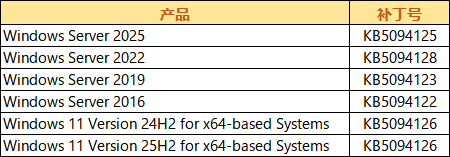
2、下载微软官方提供的补丁:
https://msrc.microsoft.com/update-guide
完整微软通告:
https://msrc.microsoft.com/update-guide/releaseNote/2026-jun